
Eight Years with Virgil Abloh
I worked with Virgil Abloh for eight years.
When we started, I was Off-White’s only designer. I designed everything, menswear and womenswear. After about two years I focused on the women’s collection, taking care of practically everything: from runway shows to made-to-measure pieces, from wedding dresses to those for celebrities, up to special projects for events such as the Met Gala.
At the same time, I was also his go-to designer for many of his personal projects and most important collaborations, from Nike to Louis Vuitton, up to Chrome Hearts and Undercover.
In eight years we did a huge number of things together. But the most important thing Virgil did for me was not involving me in some extraordinary project.
It was changing the way I see.
Before meeting him, like many designers, I looked for inspiration mostly in fashion. I looked at collections, studied archives, searched for references, built moodboards. All very interesting, of course, but also terribly self-referential.
A world that keeps looking at itself, populated by people who talk about clothes with other people who talk about clothes. A small circle convinced it is the center of the universe, while the rest of the world, fortunately, carries on living without worrying about it too much.
Then Virgil arrived.
He could send me a photograph of an airport, a road sign or the decidedly questionable look of a guy met on the street. Images that, in most cases, I wouldn’t even have considered worthy of attention.
And from one of those photographs a collection could be born.
Virgil wasn’t necessarily trying to invent something that didn’t exist. He was trying to look differently at something that already existed.
He had understood that contemporary culture isn’t born only in places considered culturally important. Often it is born elsewhere. On the street, in supermarkets, in airports, in music, in people’s habits.
Fashion, instead, too often keeps looking for inspiration within itself, producing objects meant for an imaginary audience, built in the image and likeness of those who design them.
Virgil looked outside.
He looked at what people really wore, what they wanted, what they recognized as part of their own lives.
And then he looked for a way to transform it.
It wasn’t simply a matter of taking something popular and making it expensive. The work was much more complex. You had to keep something of its origin, its meaning, its authenticity, and through design take it somewhere else.
Because if in the end you no longer recognize where you started from, you have probably lost the most interesting part.
Our work was exactly that.
I brought my knowledge of construction, proportions, fabrics, the female body. He brought a way of seeing capable of connecting worlds that apparently had nothing to do with each other.
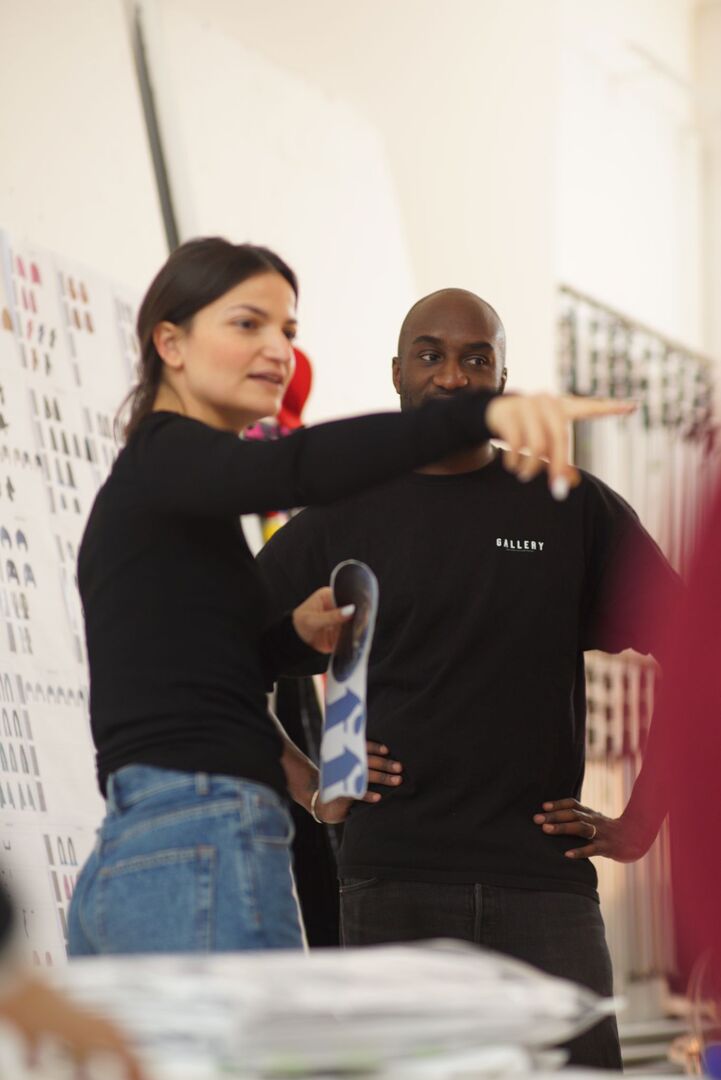
Our relationship took place mainly on WhatsApp.
We wrote to each other every day, at any hour. There were no working hours, weekends or holidays. A photograph, an idea, a question, an intuition. Anything could become the reason to start a conversation.
At a certain point I had to find space for almost two terabytes of images and conversations.
Two terabytes.
Basically a digital archive of our inability to stop working.
Even today that chat is a kind of Bible to me. Every now and then something comes to mind, a project, a conversation, an image, and I go back to look for it in there.
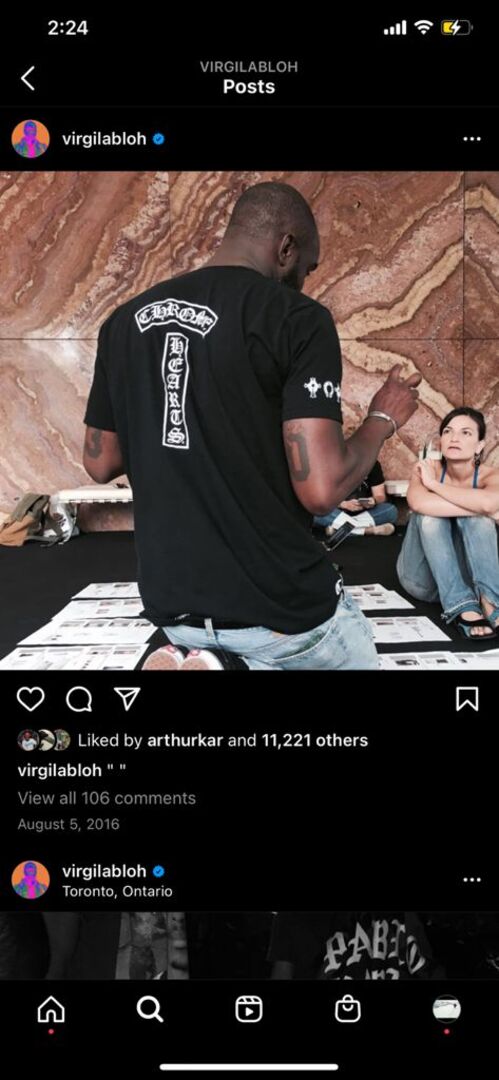
In those eight years we told each other practically everything.
And, apparently, I still haven’t finished rereading.
Sometimes just an image would arrive, without much explanation.
And from there we would begin.
But what struck me most about our relationship was the freedom.
I have never met anyone who gave me such absolute creative trust.
Virgil had a rather rare way of recognizing people’s value. He gave you trust, responsibility, freedom. And he also knew how to attach value to all this in more than words alone, and this, I must admit, made the collaboration even more pleasant.
Virgil also had a very personal way of showing his gratitude.
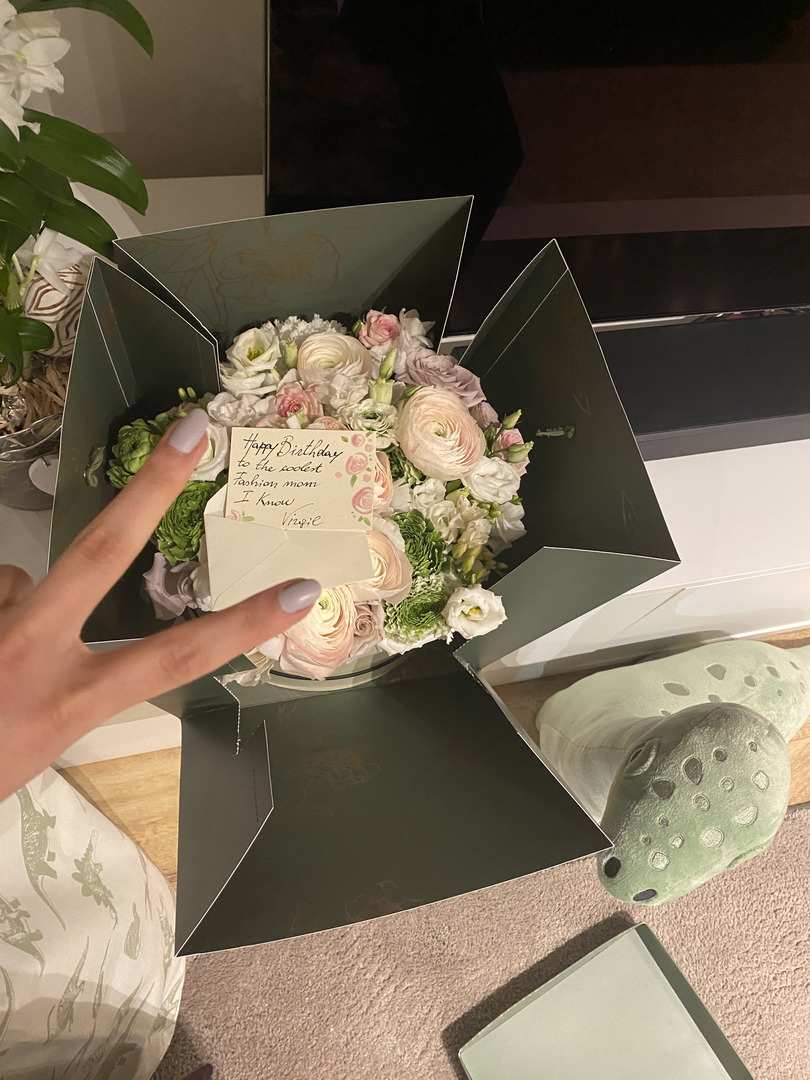
Every now and then big bouquets of flowers arrived, accompanied by handwritten notes. Sometimes after a show, to thank me for the work done. Other times for occasions that had nothing to do with fashion.
When my son was born, for example, he wrote to me that I was the coolest mom in the world.
I still have that note.
And yet I kept asking him for confirmation. I sent him photographs, drawings, fittings. I asked him whether he liked what I was doing.
And often he would answer:
“I like if you like.”
Or:
“You are the boss.”
Which was rather paradoxical, considering that my boss was him.
But I think this was one of his most extraordinary qualities.
Virgil didn’t need to constantly prove he was the person with the last word. He knew how to recognize other people’s abilities and, above all, how to let them work.
In an environment where everyone wants to have an opinion about everything, even about things they know absolutely nothing about, meeting someone capable of entrusting you with an entire responsibility without feeling the need to control every detail is quite rare.
Virgil didn’t ask me to interpret his taste.
He asked me to use mine.
And this, for a designer, is probably the greatest gift someone can give.
Of course we didn’t always agree. And not everything we did was necessarily extraordinary. But we had built a common language, a way of understanding each other that often didn’t even require much explanation.
He knew I could turn his intuitions into something concrete. I knew that, together, we could take them much further.
Virgil taught me not to consider anything too banal to become interesting. Not to be afraid of mixing different languages. To understand that the value of an idea doesn’t necessarily depend on where it comes from.
He taught me that luxury and popular culture are not two incompatible universes. That an ordinary object can become something desirable without having to renounce what it was originally.
And above all he taught me to step out of that small bubble in which fashion too often keeps confining itself.
To look at people, streets, apparently insignificant things.
To understand that the world is far more interesting than any moodboard.
I don’t think anyone else has ever managed to change my way of seeing things so profoundly.
And I also believe our relationship worked for so long precisely because we weren’t trying to do the same job.
Virgil had a vision. I had my way of giving it shape.
We trusted each other.
And in a world where everyone seems to need to control everything, perhaps this was the most revolutionary thing.
Virgil didn’t teach me how to draw.
That I already knew how to do.
He taught me to observe.